Sensitive skin often reacts to friction, sweat, residues, and rough finishing treatments. Cotton touches the body for hours, especially beneath collars, cuffs, and bedding. That contact makes fiber quality more important than marketing language. Why is organic cotton better for sensitive skin? The answer involves both cultivation and processing.
Textile Exchange’s Organic Cotton Market Report 2023 recorded 342,265 metric tonnes of organic cotton production worldwide in 2021/22. China remains an important organic cotton producer and textile manufacturing hub. Certified organic farming restricts many synthetic pesticides and fertilizers. However, organic cotton is not automatically hypoallergenic. The final fabric still depends on spinning, dyeing, washing, and finishing. That distinction matters.
GOTS requires products to contain at least 70% certified organic fibers. It also controls chemical inputs, wastewater, and social criteria across certified processing stages. OEKO-TEX STANDARD 100 tests finished textiles for substances that may harm human health. These systems provide stronger evidence than a simple “natural cotton” claim. A soft Chinese organic cotton shirt should feel smooth against the wrist, without a sharp chemical odor or stiff coating. Small details count.
Still, certification cannot remove every risk. Fragrance, detergent, dyes, and personal allergies may cause irritation. The skin’s response varies. Consumers should check the complete certification scope, not only the fiber label. Textile Exchange and GOTS reports support better traceability, but they do not replace dermatological advice. China’s organic cotton supply can offer a credible foundation for sensitive-skin products when farming, processing, and testing remain transparent. That standard is demanding. It is also the point.
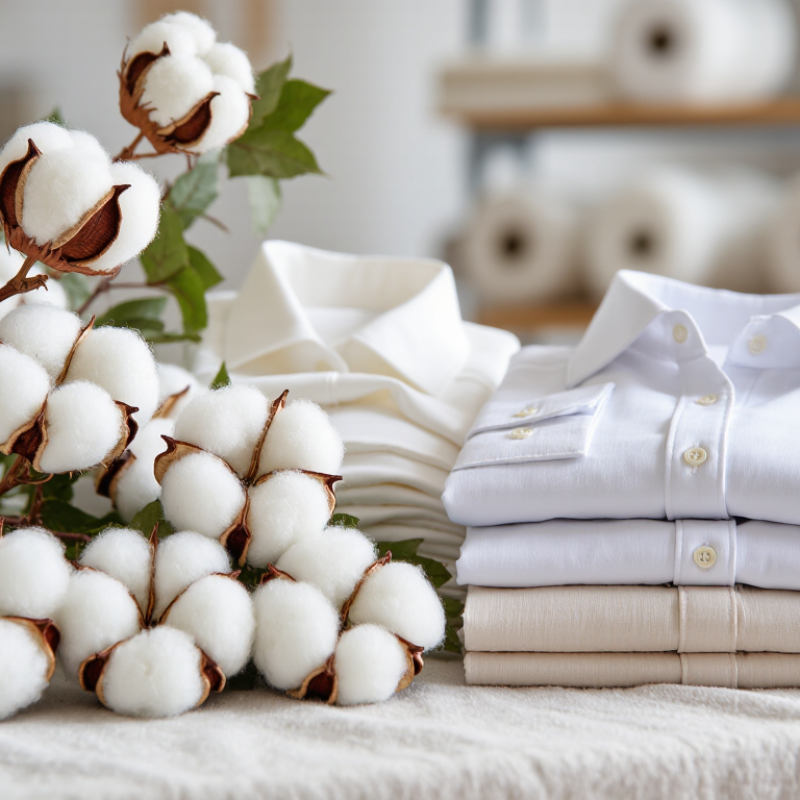
Why Is China Top Organic Cotton Better for Sensitive Skin?
“Organic cotton” is not just a soft-sounding label. Under the Global Organic Textile Standard, a product must contain at least 95% certified organic fibers to use the strongest organic claim. The remaining 5% may include approved non-organic fibers, depending on the product and standard requirements. This percentage matters. It gives shoppers a clearer basis for comparison.
For sensitive skin, the fiber is only part of the story. GOTS also controls dyeing, finishing, and chemical inputs throughout the supply chain. A well-made cotton shirt should feel smooth against the body, without a sharp chemical smell or rough seams. I have found that washing new cotton clothing once can reveal its real comfort. Some fabrics soften quickly. Others remain stiff, which deserves attention.
China produces large volumes of cotton textiles, including certified organic materials. However, country of origin alone does not prove better quality. Certification, traceability, fabric construction, and responsible processing matter more. Check the certification label and product details carefully. “Organic cotton” without a recognized percentage can be vague. Even certified fabric may not suit every person. Skin can react to dyes, detergent residue, friction, or moisture, not only to cotton itself. That is an easy detail to overlook.
| Evaluation Dimension | Conventional Cotton | Organic Cotton | GOTS-Certified Organic Textile | Relevance to Sensitive Skin |
|---|---|---|---|---|
| Fiber Production Standard | May be produced under conventional agricultural standards. | Produced according to an approved organic agricultural standard, depending on the certifier and country. | At least 95% certified organic fibers for products labeled “organic” under GOTS. | Provides a clearer, independently verified basis for evaluating the material’s origin. |
| Synthetic Pesticides and Fertilizers | Conventional farming may permit synthetic pesticides and fertilizers under applicable regulations. | Organic standards restrict or prohibit most synthetic pesticides and fertilizers and emphasize approved alternatives. | GOTS verifies the use of certified organic fibers but does not claim that every agricultural input is completely absent. | Fewer restricted agricultural inputs can reduce concern about residues, although finished-product testing remains important. |
| Genetically Modified Organisms | Genetically modified cotton may be permitted depending on local regulations. | Organic standards prohibit genetically modified seeds. | GOTS requires the organic fiber content to come from certified organic production. | Useful for consumers who prefer non-GMO agricultural practices, though GMO status alone does not determine skin comfort. |
| Wet Processing and Dyes | Processing requirements vary; some chemicals may be allowed if they comply with local rules. | Fiber certification alone does not automatically certify every dye, finish, or processing stage. | GOTS restricts hazardous chemicals and requires approved chemical inputs, wastewater treatment, and limits on substances such as certain aromatic solvents, heavy metals, and toxic surfactants. | Controls on dyes and finishing chemicals may help reduce exposure to substances that can irritate reactive skin. |
| Bleaching and Finishing | May use a range of bleaching and finishing processes allowed by applicable regulations. | Organic fiber status does not by itself guarantee a chemical-free finished textile. | GOTS sets environmental and chemical criteria for bleaching, finishing, printing, and other wet-processing stages. | A certified finished textile offers more information than an “organic cotton” claim based only on the raw fiber. |
| Traceability | Traceability requirements depend on the supplier and applicable law. | Traceability is generally provided through the relevant organic certification system. | GOTS requires supply-chain certification, transaction records, and inspection of certified operators. | Traceability makes it easier to verify what happened between cotton farming and the finished product. |
| Social and Labor Criteria | Requirements vary by country, supplier, and applicable labor law. | Organic agricultural certification may focus primarily on farming practices. | GOTS includes social criteria based on the International Labour Organization’s principles for certified processing facilities. | Responsible production supports product reliability, although social certification is not a direct medical measure of skin sensitivity. |
| What “China Organic Cotton” Means | The term may describe cotton grown or processed in China without specifying certification. | It should identify a recognized organic certification system and a verifiable certificate. | A product should display a valid GOTS label or certification reference that can be checked through the supply chain. | Country of origin alone does not prove that a product is safer for sensitive skin; certification and finished-product details matter more. |
| Best Verification Questions | Ask about fiber content, dyes, finishes, and compliance testing. | Ask which organic standard certified the cotton and whether the finished product is certified. | Check the certification number, label grade, fiber percentage, processing scope, and whether the product is certified by an authorized body. | Look for fragrance-free or low-irritant finishing, wash new textiles before use, and consult a healthcare professional for persistent reactions. |
| Important Qualification | Organic cotton is not automatically hypoallergenic, pesticide-free in every sense, or suitable for every person with sensitive skin. Skin reactions can also be caused by dyes, detergents, finishes, latex components, dust, or individual allergies. GOTS certification applies to the certified product and supply chain within the scope of the certificate. | |||
A strong organic claim usually requires at least 95% certified organic fibers. The remaining 5% may include approved non-organic fibers. Check the percentage, not just the wording.
No. Country of origin alone cannot prove better comfort or quality. Certification, fabric construction, processing, and traceability matter more.
Organic farming restricts many synthetic pesticides and prohibited fertilizers. This may reduce certain agricultural chemical exposures. It does not guarantee skin comfort.
No. Skin may react to dyes, detergents, finishing agents, sweat, or friction. Organic is helpful information, but it is not a medical guarantee.
Check whether certification covers the cotton, yarn, fabric, and finished garment. Ask for documented processing locations and supply-chain records. A logo alone is not enough.
Connected farming, spinning, knitting, dyeing, and sewing stages may simplify production records. However, regional data can remain incomplete or difficult to compare. That gap deserves scrutiny.
Wash the garment once before wearing it. Notice whether it softens or stays stiff. Examine rough seams, sharp odors, and leftover detergent smells.
Choose breathable cotton with a smooth surface and soft inner seams. Reduce heavy finishing and rough labels. Sometimes, the seam matters more than the fiber claim.
Why is organic cotton better for sensitive skin? Organic cotton can be a gentler choice because it is produced under standards that limit certain agricultural chemicals and support more transparent fiber sourcing. For certification under GOTS, a textile must contain at least 95% certified organic fibers, while traceability practices and production data from China’s organic cotton supply can help clarify how the material is grown and processed. USDA organic rules also restrict many synthetic agricultural inputs, which may reduce concerns about chemical exposure during cultivation.
However, organic status alone does not determine how a fabric feels against the skin. Breathable cotton fibers can help manage heat and moisture, while softness depends on fiber quality, spinning, and finishing. Dyes, coatings, and other treatments also matter. Testing under OEKO-TEX STANDARD 100 evaluates textiles for more than 1,000 potentially harmful substances, offering an additional layer of reassurance. For sensitive skin, the best option is a breathable, softly finished fabric with verified organic content and independently tested chemical safety.

 Fancy Home