Why mix patterns in a maximalist bedroom? Layered prints can make a room feel collected, personal, and warmly lived in. A floral duvet, striped curtains, and a small geometric rug can share space without competing. The goal is not to match everything. It is to create a visual rhythm your eye can follow. Start with one pattern you genuinely love, perhaps a bold botanical print across the bed. Then repeat one of its colors in a smaller stripe or check. Keep the scale varied: large motifs need quieter neighbors, while tiny prints can add texture without taking over. Not a strict formula. Some combinations look better in a shop than under your bedroom’s actual morning light.
“How to mix patterns in a maximalist bedroom?” begins with choices you can test, not rules you must obey. Lay fabric samples beside the wall color, wood furniture, and existing rugs. Photograph them in daylight and again after dark; warm bulbs can change how colors meet. Use a shared color, repeated shape, or similar level of contrast to connect unlike designs. Let one surface breathe, perhaps a plain lampshade or solid-colored throw, so the eye can rest. Small room? Keep the biggest print on one focal area, and use softer patterns elsewhere. A pattern may feel too loud after a week, or a favorite color may disappear against the headboard. Adjust one layer at a time, and live with the arrangement before buying more. Maximalism should feel expressive, not exhausting.
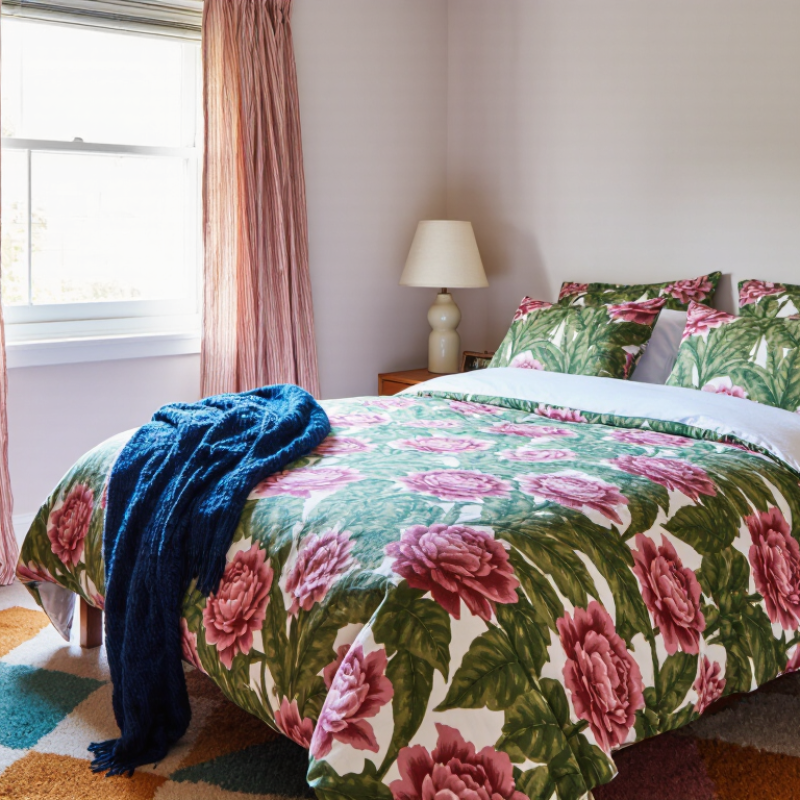
Pattern mixing in a maximalist bedroom means combining prints with different scales, colors, or rhythms instead of matching every textile. Picture a small floral duvet, broad striped curtains, and a patterned cushion. They can coexist when one color, such as rust or deep green, appears in each. Repetition gives the eye a place to land. Contrast keeps the room lively.
Pinterest’s 2025 Predicts report recorded a 215% year-over-year rise in searches for “maximalist decor.” That is a useful signal of interest, not proof that every bedroom needs more pattern. In practice, test combinations with fabric swatches beside the bed and check them in daylight and lamplight. Keep one surface quieter, perhaps a plain headboard or solid blanket, so the prints have room to breathe. Small details matter. A thin border on a rug may echo a curtain stripe without making the match too obvious. Still, there is no perfect formula; a room can look energetic in a sample board and busy once the bed is made. The slightly awkward mix may be the one that feels personal.
Pattern mixing combines different prints and motifs to create a bedroom that feels layered, personal, and visually engaging. The ideas below offer practical ways to balance variety with cohesion.
| Design Dimension | What It Means | How to Apply It | Bedroom Example | Why It Helps |
|---|---|---|---|---|
| Pattern mixing | Using two or more distinct prints in the same room, such as florals, stripes, checks, or geometric motifs. | Choose patterns that share at least one visual connection, such as a color, mood, or style. | Pair floral bedding with striped curtains and a small geometric cushion. | Creates visual variety and gives the room a more collected, individual character. |
| Scale contrast | Combining patterns with different motif sizes, from bold, oversized designs to fine, compact repeats. | Use one large-scale print as the focal point, then balance it with medium and small-scale patterns. | Set a large botanical duvet cover against narrow pinstriped pillowcases. | Helps patterns remain distinct instead of competing at the same visual intensity. |
| Color connection | A shared color that appears across multiple patterns and helps tie them together. | Repeat one or two colors in bedding, curtains, cushions, or an area rug. | Use a blue accent in a floral duvet, a checked cushion, and a solid throw. | Creates a sense of cohesion while still allowing different motifs to stand out. |
| Pattern hierarchy | A clear visual order that gives one print the leading role and lets other patterns play supporting roles. | Choose a focal pattern first, then select quieter prints and solid colors around it. | Make a patterned headboard the focal point, with simpler printed bedding and plain sheets. | Guides the eye and makes a layered room easier to read. |
| Motif variety | Mixing different kinds of visual marks, such as organic florals, linear stripes, and structured checks. | Combine motifs with contrasting shapes while keeping the overall palette or style consistent. | Layer a leafy print, a simple stripe, and a small-scale dot pattern. | Adds contrast and depth without relying on a single repeated design. |
| Solid-color pauses | Using plain surfaces between patterned ones to provide visual breathing room. | Balance patterned textiles with solid sheets, a plain throw, or an unpatterned wall area. | Pair printed bedding and curtains with a solid-colored blanket and cushions. | Prevents the room from feeling visually crowded and lets key patterns remain noticeable. |
| Texture and material | Adding tactile differences, such as woven, smooth, quilted, or embroidered surfaces, alongside prints. | Vary fabric texture while keeping the patterns and colors coordinated. | Combine printed cotton bedding with a textured knit throw and a woven cushion. | Builds a layered, comfortable look even when the color palette is restrained. |
| Personal expression | Selecting patterns that reflect the occupant’s preferences rather than following a rigid matching rule. | Use meaningful colors, motifs, or inherited textiles as starting points for the room’s palette. | Build a scheme around a favorite floral quilt, then add complementary stripes and checks. | Makes the bedroom feel more individual and thoughtfully assembled. |
It means combining prints with different scales, colors, or rhythms. A small floral duvet can sit beside broad striped curtains.
Repeat one or two colors across bedding, curtains, and rugs. Deep green or rust can link otherwise different prints.
Start with the largest pattern, often on a duvet or upholstered headboard. Let its scale guide smaller checks or stripes.
Keep one surface plain, such as a headboard, sheet, or blanket. A solid cushion can also separate patterned pillows. Leave breathing room.
Yes. Their shapes differ, so they can create contrast without repeating the same visual rhythm. The result may still feel a little uneven.
Spread them around the room rather than stacking them all on the bed. A patterned rug can balance a floral quilt near the floor.
View swatches beside the bed in daylight and lamplight. Warm bulbs can make similar shades look almost identical.
Step back from the doorway and notice where your eye lands. If it jumps between too many busy areas, replace one print with a quieter texture.
Mixing patterns in a maximalist bedroom is the art of combining prints to create a space that feels expressive, layered, and inviting rather than chaotic. Stripes, florals, checks, and other designs can work together when they share a visual connection, such as a recurring color, a complementary mood, or a similar style. Layered patterns add depth and personality, while thoughtful choices help each design contribute to the room without competing for attention.
How to mix patterns in a maximalist bedroom? Start by balancing scale: pair a large, bold print with smaller, quieter patterns, and use color to create a sense of harmony. A considered palette can link different designs, even when their motifs vary. Spread patterns across bedding, curtains, rugs, cushions, and other bedroom elements so they feel intentional throughout the room. Leave some visual breathing space, too, allowing standout prints to shine while the overall arrangement remains cohesive.

 Fancy Home