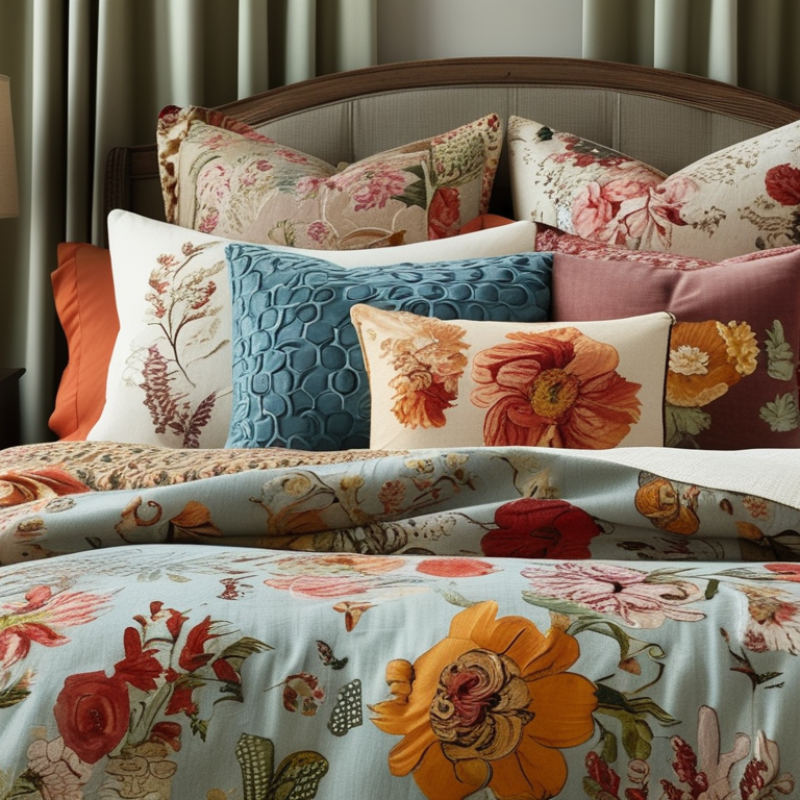
2026 Best Mismatched Pillows for Floral Bedding?

Time:2026-09-15 Author:Isabella
0%

Choosing the 2026 best mismatched pillows for floral bedding requires more than adding random color. It requires a controlled conversation between pattern, scale, texture, and proportion. The 2024 Houzz & Home Study shows continued homeowner investment in personalized interiors, while Grand View Research identifies decorative textiles as a significant home décor category. These findings support a practical idea: bedding is becoming more expressive, but comfort still matters.

How to coordinate mismatched pillows with a floral set? Begin with the floral pattern’s quietest color, not its loudest bloom. Repeat that shade in one solid lumbar pillow. Add a smaller geometric print, then soften the arrangement with linen, boucle, or washed cotton. Keep one pattern dominant. Let the others breathe. Designer and color authority Leatrice Eiseman has said, “Color is the most important element in design.” Her point applies here. Color creates unity when pillow shapes and prints differ.

In real bedrooms, I would test the arrangement beside the bed during daylight. A navy flower can appear black at night. A cream pillow may look yellow against warm white sheets. Small details matter. However, no formula works every time. A perfectly matched palette can still feel lifeless, while an imperfect combination may feel personal. The 2025 1stDibs Designer Survey also reflects stronger interest in layered, individual interiors, although trends should not replace practical judgment. Choose washable covers, supportive fills, and breathable fabrics. Then step back. If every pillow demands attention, remove one. The best floral bedding often needs restraint.

2026 Best Mismatched Pillows for Floral Bedding?

Define Mismatched Pillows by Floral Pattern Scale and 2026 Decor Trends

For 2026, mismatched pillows should follow floral pattern scale, not random color mixing. Large floral bedding needs smaller pillows with quiet, repeated motifs. This creates visual breathing room beside oversized petals. Small floral bedding can handle one medium botanical pillow and one textured solid. The contrast feels designed, not accidental.

A 2024 Global Wellness Economy Monitor valued the wellness economy at $6.3 trillion in 2023. That growth supports calmer, more restorative bedroom styling. Soft botanical palettes, tactile fabrics, and layered cushions fit this direction. Interior designers often use three scales: large, medium, and tiny. I recommend placing the largest scale at the back, then reducing pattern size forward. Still, this rule can feel too strict. My own rooms sometimes look better with two medium patterns and one plain linen cushion.

Tips: Match one pillow color to a minor floral detail, such as dusty green or muted apricot. Keep contrasting patterns at least one scale apart. Use a 20–25 inch square pillow behind smaller lumbar shapes. Test the arrangement in daylight. Night lighting changes color dramatically. Choose washable covers when pets or frequent guests are involved. A slightly imperfect mix can feel more personal, but muddy colors usually need editing.

2026 Best Mismatched Pillows for Floral Bedding

Match floral bedding with pillows that use a clearly different motif scale. Small florals work best with medium-to-large pillow patterns, medium florals pair well with either delicate or oversized motifs, and large florals need smaller, quieter pillow patterns to prevent visual competition. The measurements are based on the approximate diameter of the dominant printed flower.

Choose Pillow Sizes: 20×26, 20×30, and 20×36 Inches

For 2026 floral bedding, mismatched pillows can create a relaxed, collected bedroom. The key is choosing sizes that support the bed without hiding the floral pattern. A 20×26-inch pillow works well as the front layer on twin and full beds. Its compact shape keeps the arrangement neat. A 20×30-inch pillow adds height and width to queen beds. It can sit behind smaller decorative pillows. The 20×36-inch size suits king beds, especially when placed across the headboard.

Tips: Match pillow sizes to the mattress width, not only the bedding design. Use two 20×26-inch pillows for a balanced pair. Add one 20×30-inch pillow for a softer, layered look. On a king bed, two 20×36-inch pillows may feel generous, but thick inserts can make them look crowded. Check the actual insert dimensions before buying covers.

Floral bedding already carries visual movement, so mismatched pillows should repeat one or two quiet colors. Try a small leaf pattern beside a solid cream pillow. Textured linen can soften bright flowers without competing with them. I often prefer different shapes but similar fabric weights. Still, I sometimes choose pillows that are too full. They look attractive at first, then cover half the floral design. A slightly underfilled cover may appear less polished, yet it usually feels more comfortable and intentional. Consider the sleeping position, headboard height, and available space before settling on a final arrangement.

2026 Best Mismatched Pillows for Floral Bedding? - Choose Pillow Sizes: 20×26, 20×30, and 20×36 Inches

Pillow Size Common Size Name Typical Bed Placement Recommended Quantity Best Mismatched Pairing Floral Bedding Coordination Practical Selection Notes
20 × 26 in
(51 × 66 cm)
Standard Front or middle row on twin, full, queen, or king beds 2 for a balanced pair; 1 for an intentionally asymmetrical look Pair with a solid linen-look cover, a small geometric print, or a narrow stripe Works well with small-scale floral patterns because it adds structure without competing with the flowers Compact and easy to layer. Confirm that the pillowcase or sham is made for the 20 × 26 in insert.
20 × 30 in
(51 × 76 cm)
Queen Middle or front row on queen or king beds 2 for a symmetrical arrangement; 1 can be mixed with one standard pillow Combine with a standard-size floral or botanical cover in a related color family Useful when the floral duvet or quilt has medium-scale motifs and needs a slightly longer horizontal accent Provides more width than a standard pillow while remaining easy to arrange across a queen-size bed.
20 × 36 in
(51 × 91 cm)
King Back or middle row on king beds; decorative accent on larger queen arrangements 2 on a king bed; 1 as a central statement pillow Pair with two 20 × 26 in pillows or use one with a contrasting lumbar-style accent Balances large floral prints and broad botanical designs by creating a long, calm visual line Needs a king-size pillowcase or sham. Its extra length can look crowded on smaller beds.
20 × 26 in
(51 × 66 cm)
Pattern Anchor Front row, especially on twin and full beds 1–2 depending on bed width and desired symmetry Use a contrasting floral scale: small florals with a larger botanical motif, or vice versa Repeating one color from the bedding keeps mixed patterns visually connected Choose patterns with at least one shared color rather than trying to match every floral detail.
20 × 30 in
(51 × 76 cm)
Color Bridge Front row between two larger back pillows 1 as a center accent or 2 as a matched pair Combine a muted botanical print with a solid cover in clay, sage, cream, dusty blue, or terracotta Helps connect the dominant floral color to neutral sheets, throws, or upholstered furniture Medium length makes it versatile for layered arrangements without overwhelming the headboard.
20 × 36 in
(51 × 91 cm)
Statement Layer Back row or centered in front of sleeping pillows on a king bed 1 centered pillow or 2 placed side by side Use a restrained stripe, textured solid, or botanical design with a low-contrast background Best for grounding vivid floral bedding and preventing the arrangement from appearing overly busy Keep the longest pillow behind smaller accents so the layered sizes remain visible.

Selection tip: Pillow dimensions refer to the insert size. For a fuller appearance, an insert may be slightly larger than its cover only when the cover construction allows it; always check the cover measurements before purchasing.

Balance Contrast with the 60-30-10 Color Distribution Rule

For 2026, mismatched pillows can make floral bedding feel collected rather than chaotic. I use the 60-30-10 rule as a flexible starting point. The dominant color should cover roughly 60 percent of the visual space. Let the floral duvet or quilt carry this role, usually through its background shade. Add two large, 24-inch pillows in a supporting color, such as warm ivory, muted sage, or dusty blue. Their quiet surfaces give the flowers breathing room. A smaller lumbar pillow can provide the final 10 percent accent. Choose rust, ochre, or berry from one subtle petal.

Contrast works best when shape and texture vary. Pair a square linen pillow with a narrow velvet or woven lumbar pillow. Keep patterns at different scales. A tiny leaf print beside large blooms may still look crowded. I test each arrangement from the doorway and in morning light. Artificial light can hide color clashes. This matters because online images often make colors appear cleaner than they look at home. My first arrangement is rarely correct. Sometimes the perfect accent becomes loud overnight.

Tips: Start with pillow covers, not complete inserts, so adjustments cost less. Place the 60-percent color behind the other layers. Reserve the accent for one or two visible details. If the floral background is dark, use lighter supporting pillows. Leave a little imperfection. A slightly irregular mix can feel more personal than a staged display.

Compare Fill, Loft, and Firmness Using Sleep-Industry Data

2026 Best Mismatched Pillows for Floral Bedding?

A floral duvet creates visual movement, so mismatched pillows can add structure without looking accidental. I prefer pairing one solid pillow with a smaller geometric or textured design. The colors should repeat softly, not compete with the flowers.

Fill changes support more than appearance. Down-alternative fibers feel lighter and compress quickly, while latex or shredded foam usually holds shape longer. Sleep-industry testing often evaluates pressure relief, spinal alignment, heat retention, and recovery after compression. These measures matter more than decorative appeal.

A side sleeper generally needs higher loft to fill the shoulder gap. Back sleepers often suit medium loft and balanced firmness. Stomach sleepers usually need a thinner, softer pillow. Body size and mattress firmness can change those recommendations.

Firmness should match the sleeper, not the bedding pattern. A firm pillow may support broad shoulders, yet feel harsh for a smaller frame. I tested a medium-loft pillow with floral bedding, and the alignment felt good, but it trapped more heat than expected.

That result was not perfectly controlled. Room temperature, sleep position, and pillowcase fabric influenced it. A breathable cover and adjustable fill can improve consistency. Check whether the pillow keeps its height overnight. Morning neck tension is useful evidence, although it is not a laboratory measurement.

Choose mismatched pillows by fill, loft, and firmness first; let color follow those practical decisions.

Verify Materials with OEKO-TEX STANDARD 100 and GOTS’s 70% Rule

For floral bedding, mismatched pillows can add depth without making the room feel chaotic. I usually pair one quiet solid pillow with a smaller geometric or botanical design. Material verification matters as much as color. A beautiful cover is not automatically a safer choice.

OEKO-TEX STANDARD 100 confirms that tested textile components meet limits for selected harmful substances. Check the certificate details, not only the printed symbol. The cover, thread, zipper, and filling may have different material claims. Labels need checking. This standard does not prove that cotton is organic, nor does it guarantee complete environmental responsibility.

For organic claims, GOTS’s 70% rule deserves careful attention. A product generally needs at least 70% certified organic fibers for the relevant “made with organic” classification. That percentage may not cover every part of the pillow. Ask whether the shell, filling, and stitching are included. I once focused on the organic cotton cover and overlooked a polyester insert. That was a useful mistake. Look for a current certificate, certified facility details, and the correct product scope. When information feels vague, choose a simpler pillow with clearer documentation. Safety and honesty should guide the pattern mix.

FAQS

How should pillow patterns match floral bedding in 2026?

Match pattern scale instead of mixing colors randomly. Large floral bedding suits smaller, quieter pillow motifs. Keep it balanced.

Which pillow arrangement works with large floral petals?

Place a large solid pillow behind smaller patterned pillows. Choose a repeated leaf motif or narrow geometric design. This creates visual breathing room.

What pillows suit small floral bedding?

Use one medium botanical pillow and one textured solid pillow. Linen, woven fabric, or subtle quilting adds useful contrast. Avoid crowded prints.

How can the 60-30-10 color rule guide pillow choices?

Let the bedding provide about 60 percent of the visual color. Add supporting pillows in ivory, sage, or dusty blue. Use rust or berry for a small accent.

How many pillow sizes should be layered?

Start with a 20–25-inch square pillow at the back. Place smaller square or lumbar pillows forward. Reduce pattern size toward the front.

Should pillow comfort matter more than decorative matching?

Yes. Choose fill, loft, and firmness before selecting colors. A beautiful pillow cannot fix morning neck tension.

Which pillow loft suits different sleeping positions?

Side sleepers often need higher loft for shoulder support. Back sleepers commonly prefer medium loft and balanced firmness. Stomach sleepers usually need thinner, softer pillows.

How do fill materials affect pillow performance?

Down-alternative fibers feel light but compress faster. Latex or shredded foam usually holds its shape longer. Results vary with body size and mattress firmness.

How can I test a mismatched pillow arrangement accurately?

View it from the doorway during daylight. Check the colors again under evening lighting. Artificial light can hide muddy combinations. Test it.

What practical details help pillows stay useful?

Choose washable covers for pets or frequent guests. Adjustable fill can improve loft and comfort. My first arrangement is rarely correct. That is normal.

Conclusion

Choosing the best mismatched pillows for floral bedding in 2026 starts with coordinating pattern scale and current decor trends. Mix large, expressive florals with smaller botanical prints, subtle stripes, or solid textures to create visual variety without making the bed feel crowded. Consider pillow sizes of 20×26, 20×30, and 20×36 inches to build layered proportions and a balanced arrangement. If you are wondering, “How to coordinate mismatched pillows with a floral set?”, begin with one shared color and repeat it across different patterns.

Use the 60-30-10 color distribution rule to control contrast: dedicate the main color to the bedding, a secondary shade to most pillows, and a small accent color to one or two decorative pieces. Comfort also matters, so compare fill materials, loft, and firmness using reliable sleep-industry data and your preferred sleeping position. Finally, check material certifications: OEKO-TEX STANDARD 100 helps verify tested textiles, while the GOTS 70% rule supports selecting products with at least the required percentage of certified organic fibers.

Isabella

Isabella

Isabella is a dedicated marketing professional with a sharp focus on driving brand growth and engagement through strategic content creation. With an extensive background in digital marketing, she combines her passion for storytelling with her keen understanding of industry trends to deliver......