Night sweats can turn a quiet bedroom into a damp, uncomfortable space. The wrong sheet may cling to skin, trap heat, and leave a pillowcase cool on one side but wet on the other. In 2026, shoppers have more fabric choices than ever, including cotton, linen, bamboo-derived rayon, and moisture-managing blends. Yet some marketing terms sound more scientific than they really are.
So, what bedding material is best for night sweats? The honest answer depends on airflow, moisture absorption, drying speed, personal sensitivity, and room temperature. This guide compares common materials using practical comfort factors and current textile knowledge. It also considers weave, fabric weight, finishes, and the mattress underneath. A breathable material cannot solve every overheating problem. Small details matter. A lightweight percale sheet may feel crisp after washing, while linen can soften and breathe better over time. Some sleepers prefer moisture-wicking blends, but synthetic fibers may feel clammy in poorly ventilated rooms.
I have found that “cooling” labels are not always reliable without checking fiber content and fabric construction. That is worth questioning. This guide separates useful features from vague claims and explains what to inspect before buying. Independent textile guidance, product specifications, and care instructions can support better decisions. However, persistent night sweats may have medical causes, so bedding should not replace professional advice. The best choice is washable, breathable, and comfortable through a real night—not merely impressive on a product page.
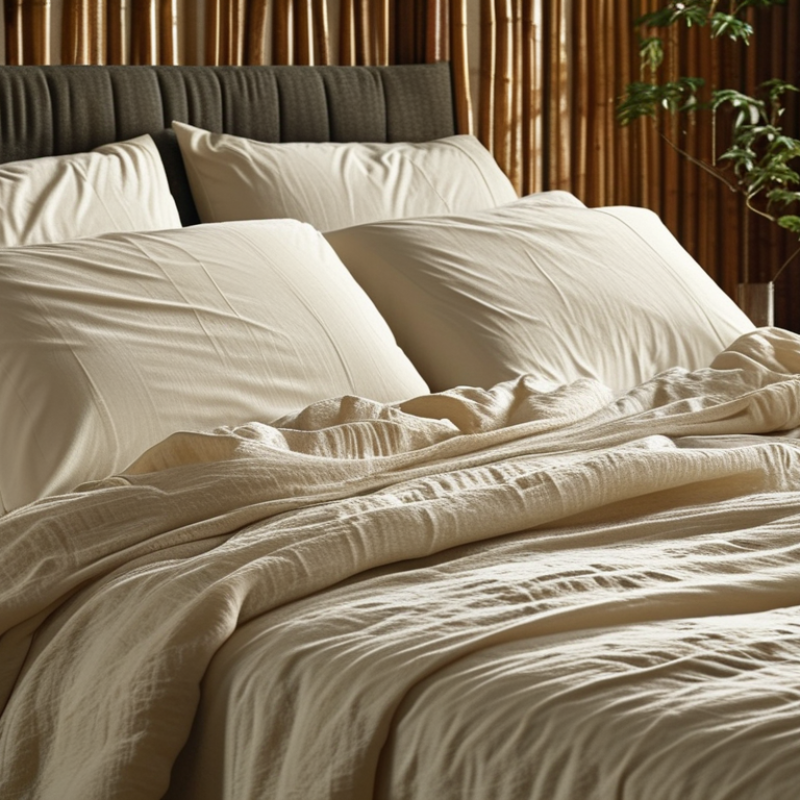
Bedding materials influence night sweats through breathability, moisture handling, and heat retention. A dense, tightly woven fabric can trap warmth against the skin. Looser cotton, linen, and well-designed moisture-wicking blends usually allow more airflow. However, “natural” does not automatically mean cooler. A heavy linen duvet may still feel warmer than a lightweight synthetic cover.
Temperature matters too. The Sleep Foundation recommends a bedroom temperature of 60–67°F (15.6–19.4°C) for many adults.
The U.S. Environmental Protection Agency recommends indoor humidity between 30% and 50%. Bedding cannot correct a hot, damp room. It can only reduce the discomfort.
Look for lightweight layers, breathable weaves, and a duvet with moderate insulation. A fabric’s fiber content alone is not enough. Construction, thread density, and finishing treatments change its performance. Textile Exchange’s Materials Market Report 2024 states that polyester represented 57% of global fiber production in 2023. That large share makes synthetic bedding common, but performance varies widely. Some polyester fabrics dry quickly; others hold heat.
Test one change at a time. Replace the duvet first, then compare the fitted sheet. Notice dampness around the back, chest, and neck. Small details matter. I would not assume one “cooling” material suits everyone. Persistent, drenching night sweats deserve medical attention, especially with fever, weight loss, or medication changes.
Night-sweat-friendly bedding should manage moisture without trapping body heat.
Breathability is the first feature to examine. Fabrics with an open weave allow air to move around the skin. Lightweight cotton, linen, bamboo-derived rayon, and certain performance fibers can feel cooler during humid nights.
Look for material that absorbs or quickly moves moisture away from the body. Absorbency alone is not enough. A towel-like sheet may hold sweat and feel damp by morning. Quick-drying construction usually performs better.
I once chose a thick, highly absorbent blanket, expecting extra comfort. It became heavy and clammy instead. That mistake changed how I judge bedding.
Thread count can mislead shoppers. A dense, tightly packed fabric may reduce airflow, even when the number looks impressive. Check the fabric weight, weave, and care instructions together. A washable layer can also protect the mattress, but plastic-backed materials may increase heat.
Test one change at a time, such as replacing the fitted sheet before changing the entire bed. Room temperature, sleepwear, hormones, medication, and humidity can affect results. Bedding helps, but it cannot explain every night sweat.
Night sweats make fabric choice more important than thread count. Start with moisture behavior, not marketing language. Textile Exchange’s 2024 Materials Market Report estimates polyester represented about 57% of global fiber production in 2023, while cotton accounted for roughly 22%. This scale explains their availability, but not their comfort.
Natural fibers offer different strengths. Cotton feels soft and absorbs sweat, yet it can remain damp against the skin. Linen feels airy because its loose structure encourages ventilation. Wool can manage moisture surprisingly well, although some sleepers find it too warm or scratchy. Synthetic polyester and nylon usually move moisture away faster and dry quickly. However, dense weaves may reduce airflow and hold odor. Fast drying helps.
Blended fabrics often provide the most practical balance. A cotton-polyester sheet may feel softer than pure polyester and dry faster than pure cotton. Still, fiber content alone can mislead. Check fabric weight, weave, and finishing treatments. The AATCC TM195 test measures liquid moisture management, so documented test results offer more useful evidence than vague “cooling” claims. At home, place a damp towel beneath a fabric sample and observe drying time and lingering dampness. My preference would change with climate, blanket weight, and sweating intensity. No material wins for everyone.
Typical moisture regain of natural, synthetic, and blended bedding fibers
Moisture regain indicates how much moisture a fiber can absorb relative to its dry weight under standard textile testing conditions. Polyester generally dries fastest because it absorbs very little moisture, while linen, wool, cotton, and regenerated cellulose fibers can absorb more. For night sweats, a breathable natural or regenerated-cellulose cover may feel comfortable, while a synthetic or blended fabric can provide faster drying. Actual performance also depends on the weave, fabric weight, finishing, room temperature, and ventilation.
Values are typical fiber-level figures; wool and blended-fiber values are approximate, and finished bedding can vary.
For night sweats, begin with the sheet, not the mattress. The National Sleep Foundation’s Bedroom Poll reported that 73% of people considered a comfortable temperature important for quality sleep. Choose lightweight cotton percale or linen, which usually feels cooler than dense, tightly woven sateen. Lyocell can also manage moisture well, but its performance depends on weave and finishing. Do not chase thread count. Higher numbers may mean heavier fabric and poorer airflow.
Covers should release heat quickly. Use a thin wool or cotton blanket instead of a thick synthetic comforter. The U.S. Environmental Protection Agency recommends indoor relative humidity between 30% and 50%. A breathable cover helps, but ventilation still matters. Wash bedding regularly, then dry it completely. Damp fabric can feel clammy and encourage odor.
Layers matter. A mattress protector with a waterproof membrane may block spills, yet some designs restrict airflow. Look for a thin, breathable protector, and avoid unnecessary padded layers. Latex, spring, and hybrid mattresses can feel different because construction matters more than material labels alone. Test the surface with your hand after ten minutes. It should not feel trapped or sticky.
There is no perfect fabric. Personal heat, room temperature, and medication can change the result. I would test one layer at a time for several nights, recording sweating, drying time, and morning comfort. This method feels slower, but bedding advice is often too confident. Persistent night sweats deserve medical attention, especially with fever or unexplained weight loss.
How to Find the Best Bedding Material for Night Sweats?
Night sweats can make a comfortable bed feel damp and heavy. Testing bedding at home gives more useful evidence than relying on fabric descriptions. Sleep on one sheet set for several nights, then record sweating, stickiness, and morning comfort. Keep the room temperature similar when possible. Cotton and linen often feel breathable, but personal response varies. A fabric that feels cool at bedtime may retain moisture later.
My first test was too casual. I changed the sheets and forgot to track humidity, sleepwear, and room temperature. That made my conclusion weaker. A simple notebook can improve accuracy. Note the bedding material, washing method, nighttime temperature, and whether the sheet dried quickly after sweating. Check the care label before washing, because excessive heat can shrink fibers or damage elastic. Dry bedding completely before storing or remaking the bed. Damp fabric can develop unpleasant odors and may irritate sensitive skin.
Tips: Wash sheets regularly, especially after heavy sweating. Use a mild, fragrance-free detergent if your skin reacts easily. Avoid fabric softener when possible, because residue may reduce absorbency. Rotate two sheet sets to allow full drying between uses. Inspect mattress protectors for trapped heat or worn waterproof layers. A breathable cover may help, but it can also feel warmer if poorly fitted. Test one change at a time. That takes longer, but the results are clearer.
| Bedding Material | Typical Moisture Regain* | Airflow and Heat Management | Sweat-Handling Performance | Best Sheet or Cover Use | At-Home Temperature Test | Recommended Maintenance | Night-Sweat Suitability |
|---|---|---|---|---|---|---|---|
| Linen | Approximately 12% | Highly breathable; its loose weave and textured surface generally allow good airflow. | Absorbs moisture and dries more quickly than many heavier natural fabrics. | Sheets, duvet covers, and lightweight pillowcases for warm rooms. | Place a hand under the fabric while lying beneath it. A noticeable airflow gap and quick release of trapped warmth indicate good ventilation. | Wash according to the care label, avoid excessive heat, and dry fully before storage. Slight wrinkling is normal. | Excellent |
| Cotton Percale | Approximately 8.5% | Crisp one-over-one-under weave provides good airflow and a relatively cool surface feel. | Absorbs perspiration but may feel damp if the fabric becomes saturated. | Fitted sheets and duvet covers for people who prefer a cool, structured feel. | After 10 minutes under a light blanket, check whether the surface still feels dry and whether heat escapes when the blanket is lifted. | Wash regularly with a mild detergent, rinse thoroughly, and dry promptly to reduce odor and mildew risk. | Very good |
| Cotton Sateen | Approximately 8.5% | Smoother and denser than percale, so it can feel warmer and provide less airflow. | Absorbs moisture, but the denser construction can slow evaporation compared with open-weave fabrics. | Duvet covers or sheets for sleepers who want softness and moderate warmth. | Compare one sateen panel with one percale panel under the same blanket; choose the panel that releases heat faster after exposure. | Use the care-label temperature, avoid fabric softener buildup, and dry completely before making the bed. | Moderate |
| Lyocell | Approximately 11–13% | Smooth, breathable, and commonly designed to provide a cool hand feel. | Absorbs moisture efficiently and can feel less clammy than some conventional synthetic fabrics. | Sheets and pillowcases for sleepers who want a smooth, low-friction surface. | Place a dry cotton cloth beneath the fabric for 15 minutes. A smaller increase in dampness suggests better moisture transfer. | Use a gentle cycle, avoid high heat and harsh bleaching agents, and follow shrinkage instructions carefully. | Very good |
| Wool | Approximately 14–18% | Highly insulating and able to buffer changes in humidity, but it may feel too warm in hot rooms. | Can absorb substantial moisture vapor without immediately feeling wet. | Lightweight blankets or mattress toppers in cool bedrooms; usually less suitable as a thick summer layer. | Use a thin wool layer for 20 minutes and compare body heat retention with an uncovered area. Remove it if heat remains trapped. | Air regularly, spot-clean when possible, avoid hot washing, and dry flat when required by the care label. | Good in cool rooms |
| Silk | Approximately 11% | Lightweight and comfortable across changing temperatures, although performance depends strongly on fabric weight and weave. | Absorbs some moisture and dries relatively quickly, but it has limited durability under heavy washing. | Lightweight sheets, pillowcases, or duvet covers for a smooth, low-bulk sleep layer. | Compare warmth retention under the same cover for 10 minutes; select the lighter construction if the surface becomes hot quickly. | Use a delicate cycle or hand wash when specified, avoid wringing, keep away from direct high heat, and store dry. | Good |
| Polyester Microfiber | Approximately 0.4% | Low moisture absorption; tightly woven microfiber may restrict heat and vapor release depending on construction. | Can wick liquid through engineered finishes, but the fiber itself does not absorb much moisture. | Budget-friendly sheets or protective layers when quick laundering is the priority. | Wear-test it with the room at a stable temperature for 20 minutes. Stop using it if the fabric feels clammy or traps heat. | Wash regularly, avoid excessive heat that can damage fibers, and do not rely on fabric softener to improve breathability. | Variable |
| Bamboo-Derived Rayon | Varies by fiber process and fabric construction | Often lightweight and smooth, but airflow depends more on yarn density and weave than on the fiber name alone. | May absorb and spread moisture effectively when made as a breathable, lightweight fabric. | Sheets and pillowcases when a soft, smooth surface is preferred. | Read the fiber-content label, then compare moisture and heat buildup against a known breathable fabric under identical conditions. | Follow the label, use a gentle wash, avoid high heat, and inspect for surface wear before continued use. | Good when lightweight |
: Dense fabric can trap warmth against your skin. Looser weaves usually improve airflow. Bedding reduces discomfort, but cannot cool a hot room.
No. Lightweight linen may feel airy, while a heavy linen duvet can feel warm. Cotton absorbs sweat but may stay damp.
Polyester and nylon often dry faster than cotton. However, dense synthetic fabric may hold heat and odors. Performance varies.
Often, yes. A cotton blend can feel soft and dry faster than pure cotton. Still, check fabric weight and weave.
Many adults sleep better around 60–67°F, or 15.6–19.4°C. Indoor humidity around 30–50% may also feel more comfortable.
Change one item at a time. Keep room temperature similar. Record dampness around your back, chest, and neck.
Wash sheets regularly and dry them completely. Rotate two sets when possible. Damp bedding can smell unpleasant and irritate sensitive skin.
They can. Some trap heat or feel clammy. Test a breathable cover, but do not assume it will help everyone.
Do not rely only on “cooling” language or fiber content. My own casual test ignored humidity and sleepwear, so the conclusion was weak.
Persistent, soaking night sweats deserve professional evaluation. Seek advice sooner with fever, unexplained weight loss, or medication changes.
Finding the right bedding material can make a significant difference for people who experience night sweats. Breathable fabrics help release body heat, absorb moisture, and improve airflow, while heavy or non-breathable materials may trap warmth and leave the sleeper feeling damp. When asking, “What bedding material is best for night sweats?” consider moisture-wicking performance, lightweight construction, softness, durability, and how well the fabric supports temperature regulation.
Natural options such as cotton, linen, and bamboo-based fabrics can offer breathability and comfort, while synthetic materials may provide faster moisture management and easier care. Blended fabrics can balance softness, drying speed, and durability. For the best results, evaluate not only sheets but also duvet covers, blankets, mattress protectors, and mattress layers, since each affects airflow and heat retention. Test different combinations, wash bedding regularly according to care instructions, keep the sleeping environment cool, and replace materials that lose their breathability or moisture-control performance over time.

Fancy Home